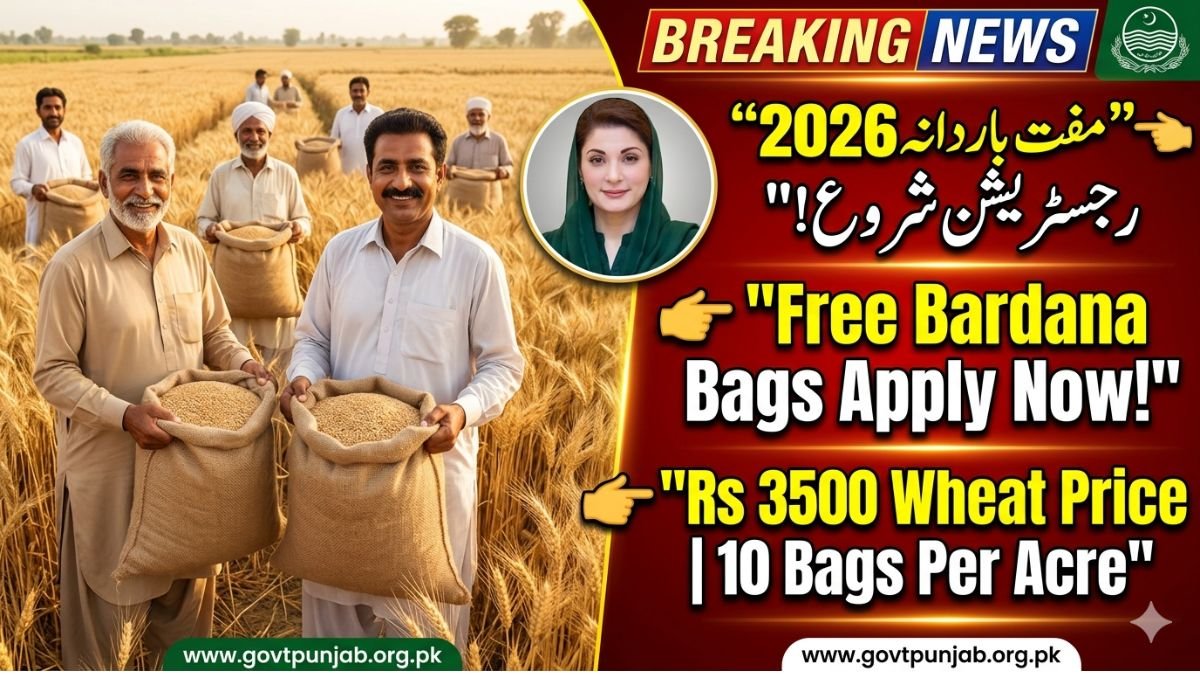
If you’re a wheat farmer in Punjab, this is the kind of news that can truly change your season. The Free Bardana Bags Registration 2026 is part of a massive government relief package aimed at supporting farmers during the wheat procurement season. Bardana, or gunny bags, are essential for storing and transporting wheat, and they often become a financial burden for small and medium farmers. This initiative removes that burden completely.
The Punjab government has stepped in with a practical solution—providing free bardana bags to registered farmers so they can store and sell their wheat without extra cost. Imagine harvesting your crop and not worrying about storage logistics or extra expenses. That’s exactly what this scheme is trying to solve.

What makes this program even more impactful is that it’s not just about free bags—it’s about building a more efficient agricultural system. From digital registration to quick payments, everything is designed to streamline the process. Farmers are no longer left guessing; they now have a structured support system.
This initiative reflects a broader vision of strengthening agriculture in Punjab. Instead of temporary relief, the government is focusing on long-term sustainability and farmer empowerment.
Key Announcement by Punjab Government
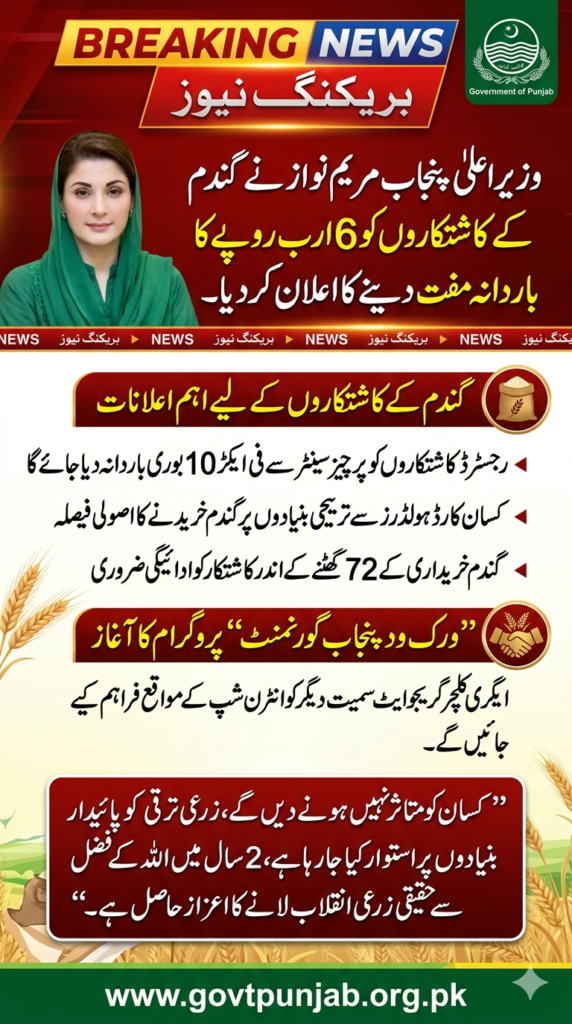
The announcement came directly from Chief Minister Maryam Nawaz, signaling a strong commitment to farmers’ welfare. According to official updates, the Punjab government has allocated Rs 6 billion specifically for the distribution of free bardana bags across the province.
This isn’t a small pilot project—it’s a province-wide initiative targeting thousands of farmers. The goal is clear: reduce costs, increase efficiency, and ensure that farmers get fair value for their hard work.
Another important aspect of this announcement is transparency. The government has emphasized that only registered farmers will receive these benefits. This ensures that the system remains fair and avoids misuse.
The announcement also ties into other agricultural reforms, including better pricing, faster payments, and priority procurement. It’s like putting together all the missing pieces of a puzzle to finally create a farmer-friendly ecosystem.
Latest Breaking News 2026
Wheat Price Rs 3500 per Maund
One of the biggest highlights of this scheme is the fixed wheat procurement price of Rs 3,500 per maund, which the Punjab government has officially approved.
For farmers, pricing is everything. A fair support price ensures that their efforts translate into real profit. In previous years, fluctuating market rates often left farmers at a disadvantage. But with this fixed price, there’s a sense of security and predictability.
Think of it like a guaranteed paycheck for your hard work. You know what you’ll earn before you even sell your crop. That kind of stability can make a huge difference, especially for small-scale farmers who rely on seasonal income.
This move is also expected to stabilize the wheat market across Punjab, preventing price manipulation and ensuring fair competition.
Rs 6 Billion Bardana Package
The government didn’t stop at pricing—it backed it up with a massive Rs 6 billion bardana package.
This investment shows how serious the authorities are about supporting agriculture. Instead of leaving farmers to manage storage costs on their own, the government is stepping in to handle one of the biggest logistical challenges.
The scale of this package is impressive. Thousands of farmers across Punjab will benefit from free bags, making it one of the largest agricultural relief efforts in recent years.
And let’s be honest—when a government puts real money behind a policy, it signals commitment. This isn’t just a promise; it’s a funded, actionable plan.
Key Features of the Scheme
10 Bags per Acre Policy
Under this scheme, registered farmers will receive 10 bardana bags per acre from procurement centers.
This allocation is designed to match the average wheat yield per acre, ensuring that farmers get enough bags to store their produce efficiently. It’s a practical approach that aligns resources with real needs.
Instead of distributing a fixed number of bags per farmer, the government has chosen a land-based distribution model, which is much fairer. Larger farms get more bags, while smaller farms get what they need.
This also encourages accurate land registration and documentation, which can improve agricultural data in the long run.
72 Hours Payment Rule
Another standout feature is the mandatory payment within 72 hours after wheat procurement.
Delayed payments have always been a major issue for farmers. Waiting weeks—or even months—for payment can disrupt their financial planning. This new rule changes the game completely.
Now, farmers can sell their wheat and receive payment within just three days. That means quicker cash flow, better financial stability, and less stress.
It’s like switching from a slow bank transfer to instant payment—simple, fast, and reliable.
Eligibility Criteria
Who Can Apply?
Not every farmer will automatically qualify for this scheme. The government has set clear eligibility criteria to ensure that benefits reach the right people.
To apply, you must:
- Be a resident of Punjab
- Be a registered wheat farmer
- Have valid land ownership or tenancy records
The focus is on genuine farmers who actively contribute to wheat production. This helps maintain transparency and ensures that resources are used effectively.
Kisan Card Priority
Farmers holding the Kisan Card will receive priority access to the scheme.
This card acts as a digital identity for farmers, making it easier to verify eligibility and process applications. It also reduces paperwork and speeds up the entire system.
If you don’t have a Kisan Card yet, it’s highly recommended to get one. Think of it as your entry ticket to multiple government benefits—not just bardana bags.
Registration Process
Online Registration Method
The government is expected to provide an online registration portal, making the process simple and accessible. Farmers can apply from their homes or nearby service centers.
The shift to online registration is a big step forward. It reduces long queues, minimizes corruption, and ensures faster processing.
Required Documents
To complete your application, you’ll typically need:
- CNIC (Computerized National Identity Card)
- Land ownership documents
- Kisan Card (if available)
- Mobile number
Having these documents ready can make the process smooth and hassle-free.
Step-by-Step Apply Guide
Portal Access
Visit the official website: www.govtpunjab.org.pk
Look for the “Free Bardana Registration 2026” section and click on Apply Now.
Form Submission
Fill in your details carefully, including land size and personal information. Upload required documents and submit the form.
After submission, you’ll receive a confirmation message or tracking ID.
Benefits for Farmers
Financial Relief
This scheme significantly reduces farming costs by eliminating the need to purchase storage bags. Combined with a fixed wheat price, it ensures better profit margins.
Storage Support
Proper storage means less wastage and better quality wheat. Free bardana bags help farmers protect their produce and sell it at the right time.
Government Strategy
Agricultural Revolution Vision
The Punjab government aims to bring a “real agricultural revolution” within the next two years. This scheme is just one step toward that goal.
Monitoring Committees
To ensure transparency, provincial and divisional committees will monitor the entire procurement process.
Comparison Table
| Feature | 2025 Scheme | 2026 Scheme |
|---|---|---|
| Wheat Price | Variable | Rs 3500/maund |
| Bardana Bags | Limited | Free (10 per acre) |
| Payment Time | Delayed | 72 hours |
| Budget | Lower | Rs 6 Billion |
Common Issues & Solutions
Registration Errors
Mistakes in CNIC or land details can delay approval. Always double-check your information before submitting.
Payment Delays
If payment is delayed beyond 72 hours, contact the nearest procurement center or helpline immediately.
Bardana Registration Online Login
Farmers can now easily access the Bardana Registration Portal online without visiting offices. The government has made the system digital to save time and ensure transparency.
👉 How to Login Online
Follow these steps:
- Visit the official website: play.google.com
- Click on “Bardana Registration 2026”
- Enter your CNIC number
- Verify with OTP (SMS code)
- Access your dashboard to:
- Apply for bardana
- Check application status
- View allocated bags
- Track payment
This online system helps farmers avoid long queues and makes the entire process fast and user-friendly.
Bardana Registration App Now Available on Play Store
Great news! The Bardana Registration App is now officially available on the Google Play Store, making the process even easier for farmers.
Key Features of the App
- Easy Registration: Apply for free bardana directly from your mobile
- Login System: Secure CNIC-based login with OTP verification
- Real-Time Status: Track your application instantly
- Bag Allocation Info: Check how many bags you will receive
- Payment Tracking: Monitor your wheat payment status
- User-Friendly Interface: Designed especially for farmers
How to Download Bardana App
- Open Google Play Store on your mobile
- Search for: “Bardana Registration Punjab 2026”
- Click Install
- Open the app and login using your CNIC
Conclusion
The Free Bardana Bags Registration 2026 is more than just a government scheme—it’s a lifeline for farmers across Punjab. With Rs 6 billion funding, Rs 3500 wheat price, and fast payments, this initiative addresses multiple challenges at once.
For farmers, this is an opportunity to reduce costs, increase profits, and work with greater confidence. The combination of financial support, digital systems, and transparent policies creates a strong foundation for agricultural growth.
If you’re eligible, don’t wait. Register early, prepare your documents, and take full advantage of this scheme.
FAQs
1. How many bardana bags will farmers get?
Farmers will receive 10 bags per acre based on registered land.
2. What is the wheat price in 2026?
The government has fixed it at Rs 3,500 per maund.
3. Who is eligible for the scheme?
Registered wheat farmers in Punjab with valid documents.
4. How long does payment take?
Payments are processed within 72 hours after procurement.
5. Where can I apply?
You can apply online at www.govtpunjab.org.pk.